


Roxana Punta Álvarez & José Luis Zacarías Otiñano
Ulrika
Ulrika
Couldn't load pickup availability
Punta Álvarez, an architect, works in interior design and decoration. She studied set design at the Teatro Colón in Buenos Aires. In 1992, she was selected by Yves Saint Laurent fashion house as one of the ten outstanding women designers of the year. She has won lifetime achievement awards at Casa FOA, a Buenos Aires interior design event. Textile designer José Oti̱ano is a consultant to businesses on product development and positioning. He was awarded the best urban art installation prize at the first edition of Casa FOA (2011) and first mention in landscape design at the 2013 edition. Together, they created Ulrika, a rug crafted to the last detail that expresses the unique vision of each.
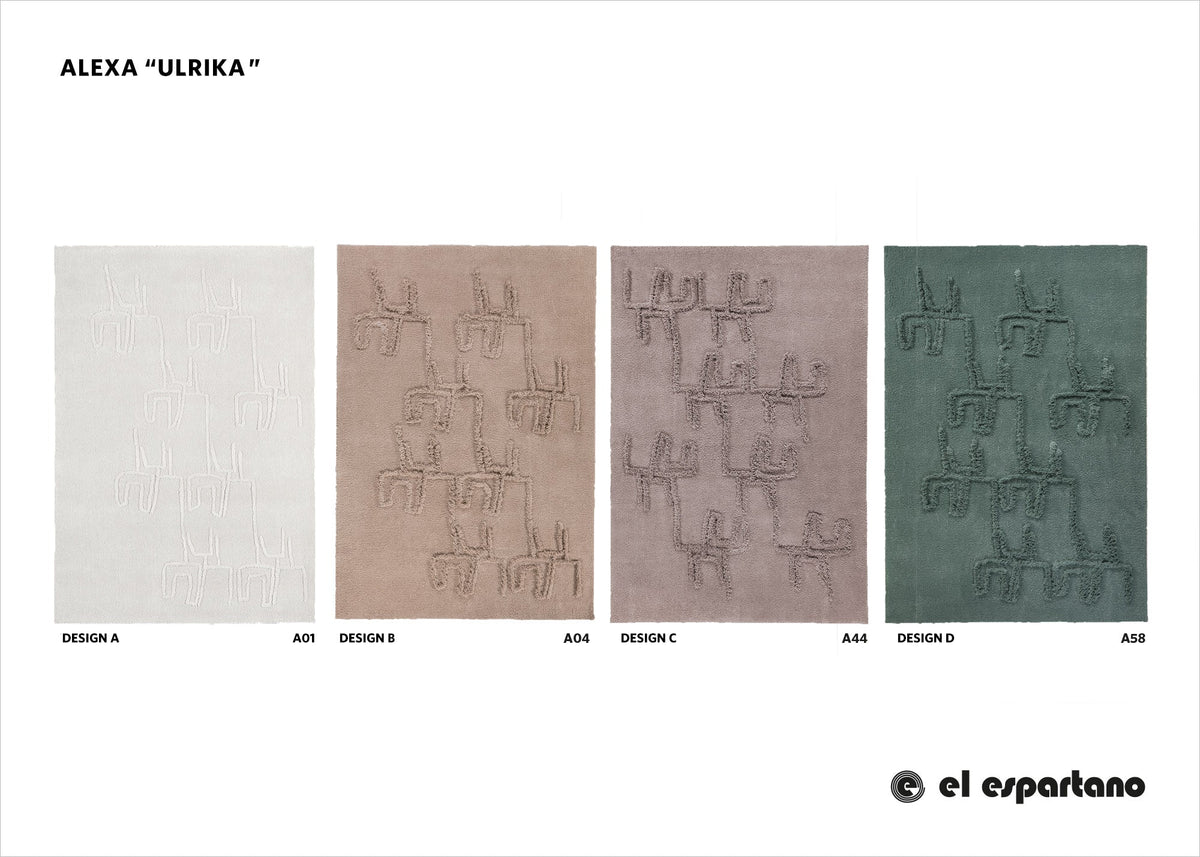
"We draw inspiration from the primitive tribal patterns of Amazon Indians' tattoos. Those patterns, removed from their context and in relation to texture and color, take on a Scandinavian quality," explain Roxana Punta Álvarez and José Luis Zacarías Otiñano.
* Real dimensions can vary by up to two inches.
Materials & care
Materials & care
- Rug type: Alexa, hand-tufted
Vacuum regularly without a brush head, blot spills immediately with a clean dry cloth, and rotate the rug periodically for even wear. Professional cleaning is recommended. Wool is naturally stain-resistant and flame-retardant.
Made to order · 45 days
Made to order · 45 days
Each rug is made to order in our Buenos Aires atelier, where design and production coexist within a single process. Current production time is approximately 45 days, plus shipping. Custom sizes and colors are available on request.
Shipping
Shipping
We ship worldwide. Shipping is calculated at checkout. For trade programs or any special request, get in touch.


The piece in motion
See it made, see it move.

The designer
Roxana Punta Álvarez & José Luis Otiñano
“We draw inspiration from the primitive tribal patterns of Amazon Indians' tattoos. Those patterns, removed from their context and in relation to texture and color, take on a Scandinavian quality.”
View the full profile